In these challenging times of COVID-19 with social distancing and lockdown our mental health can take a knock.
There is research that says hugging has beneficial effects on our mental health by triggering production of oxytocin. Simply through hugging, our brains produce soothing chemicals that help us feel safe, calm, and less stressed throughout the day. So when something stressful does come up we have a less aggressive fight or flight response.
Hugs can also be good for our immune systems too which in these current times can only be a good thing. I know from personal experience at times when I am stressed, I seem to pick up coughs and colds much more easily. In fact, the only time I have had any significant time off sick from work was when I had a management role, and my stress levels were through the roof. I caught flu for the first time in my life and was off work for 2 weeks.
A study has found that hugs and feeling socially supported can mean that people experience less severe signs of sickness and that hugs can reduce heart rate and blood pressure.
So, in these times of lockdown and social distancing when our ability to give physical hugs is curtailed why not continue with the love and support to family, friends and colleagues by making and sending virtual hugs.
This is how:
You will need.
- Card.
- Felt tip pens.
- Scissors.
- Sheet of A4 paper.
- Glue or sticky tape.
- Your hands.
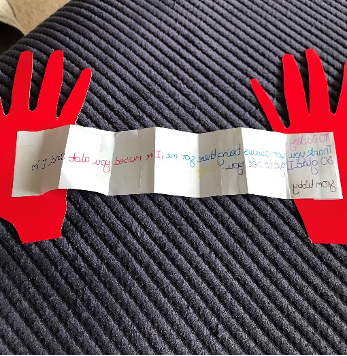
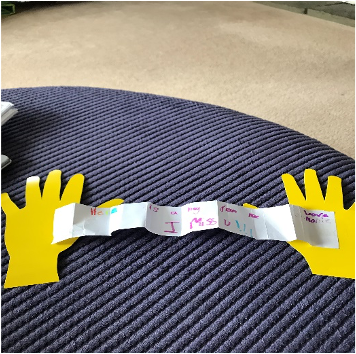
Draw round both of your hands and then cut them out. If you are feeling creative, you can decorate them or colour them in.
Cut a strip of paper approx. 5cms wide and the length of A4 sheet of paper.
Write on the paper the things you would like your hug to convey eg how you feel about them, how important they are to you, how they make you feel, what you love about them or words of encouragement and inspiration.
Fold the paper into a concertina and then open it out but don’t stretch it straight.
Then stick one end or the paper to one hand and the other end of the paper to the other hand.
There you have your virtual hug to send to a family member, friend, or colleague as a reminder of how important and loved they are.